Currently browsing tag

programming

Ray / Octree traversal: Parametric Algorithm

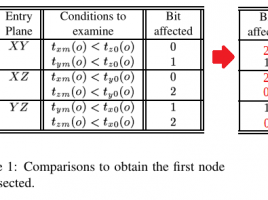
I’m implementing my current ray-octree intersection algorithm using an adapted version of the Revelles 2000 paper An efficient parametric algorithm for octree traversal, and after some painstaking debugging, I think I found a bug in the paper’s text. which seems to be acknowledged in this 2005 google groups discussion as …

Voxel Raycaster: Enter the Stanford zoo

If you’ve looked at some computer graphics literature before, you’ve probably noticed that a lot of models are used over and over again, like the Utah Teapot. Last days, I’ve been working on import functions which allow me to load the Stanford standard benchmark models in and render them, voxelized. …

It’s alive!

First rough video of my current Voxel Renderer implementation. It’s nothing too exciting, just showing that the Proof Of Concept actually works in real-time. The flyby is on the edge of the voxel field, since inside it’s just … trippy. This is a 512x512x512 field with 8 bytes per datapoint …

The 32/64 bit DLL confusion on Windows 64-bit

Since I’m developing my PhD renderer for multiple target systems (Win32, x64, LInux, …) I started using the excellent freeGlut project for simple OpenGL windowed output. So after finding the Windows binaries compiled (and maintained) by Max Martin Payne, I look at the contents of the zip file. I was …

Voxel Renderer: Spheres and Boundaries

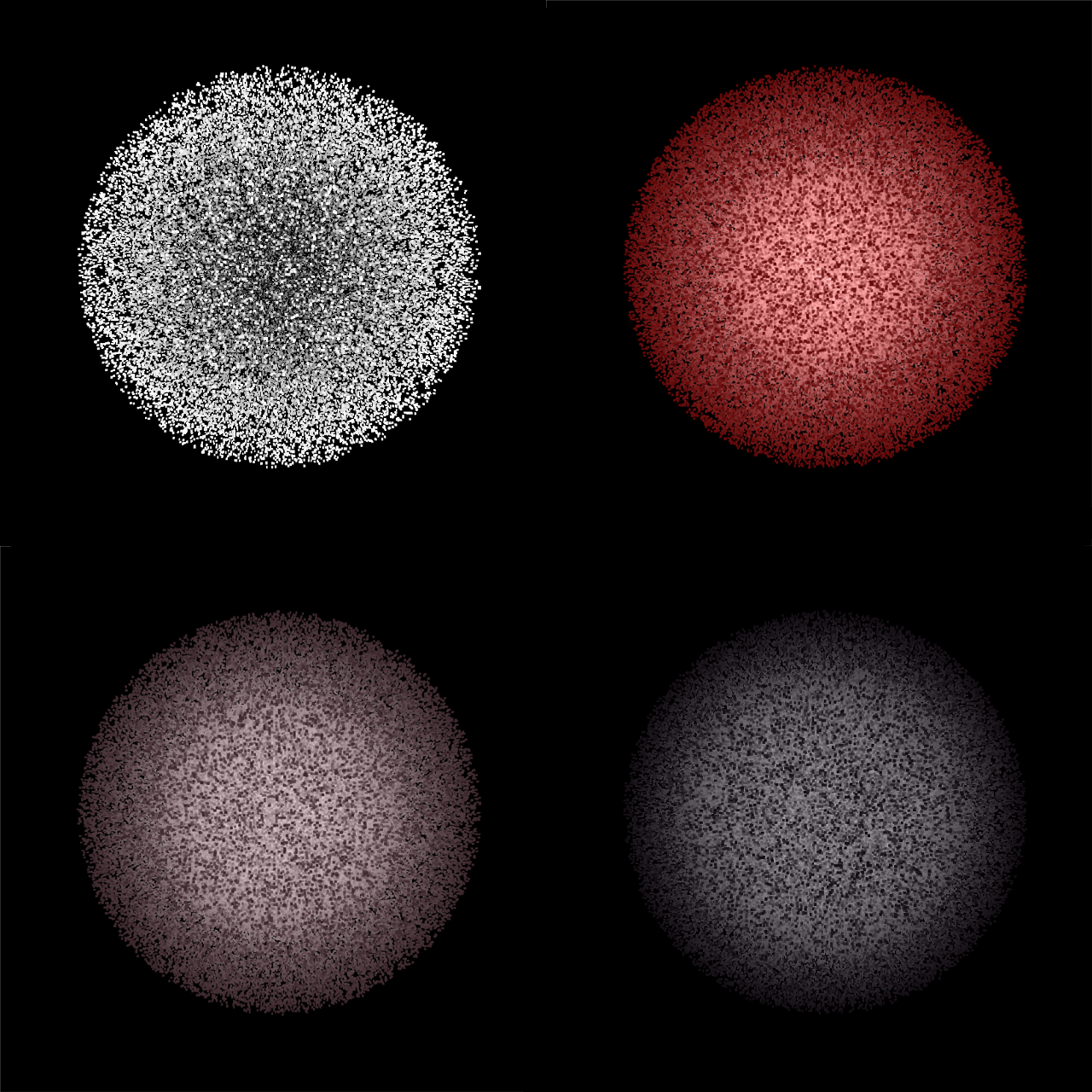
During the last days, I’ve been testing just how much my current renderer implementation can take. My implementation was started from scratch, based on raycasting (eg … interpolating distinct values along a line) in a huge data grid. At the moment it is without any optimization for quick free-space skipping, …

Traversing the grid

I’ve been busy implementing the Fast Voxel Traversal algorithm by Amanatides & Woo (PDF). The base algorithm is pretty straightforward, but getting it to give the correct results for all feasible edge cases I can come up with is hard. I don’t want to stuff the code with more and …

Voxelicious

I’m going to run out of voxel-based titles and puns real soon. Until then, have some more flying cubes! The sparseness factor influences render time a lot, since there is no efficient skipping of empty space inside the voxel grid. So denser grids render at interactive framerates (>30 fps), because the …

Voxel Renderer: got it right this time

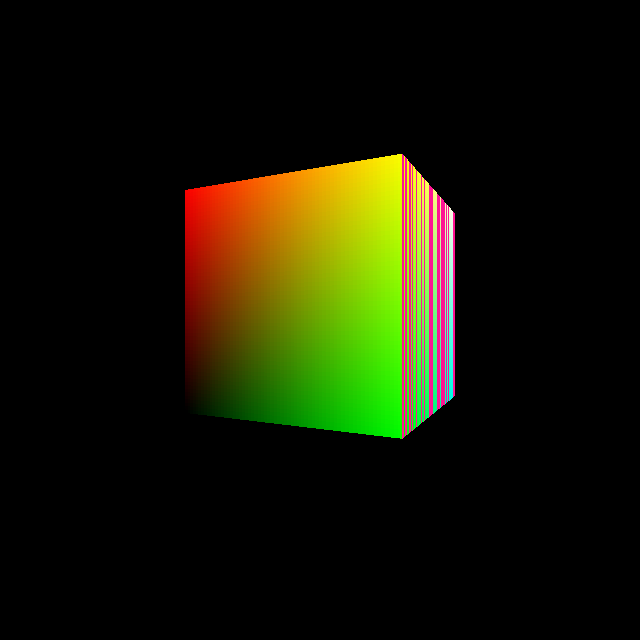
After a bit of experimenting with the boost::round functionality, the solution to the numeric instability problem was (of course) a lot simpler. The current implementation runs at 25 fps for a 600×600 resolution – pure software rendering. If you don’t know anything about volume rendering or voxels, what you can …

Birth of a Voxel renderer

In the beginning of february, I started implementing a voxel-based renderer for my PhD. Starting from scratch was painful, but it taught me a lot about 3D geometry & maths and C++. To all you C++ enthousiasts out there, print this out and put it on a wall: Every time …

Migrating from CakePHP 1.3 to 2.0

I love CakePHP. It’s a PHP framework with a clear and strict Model / View / Controller (MVC) separation and a great abstraction layer for reading, updating and saving objects to the database. Recently, the CakePHP team released CakePHP 2.0, and I started updating my projects to this new version. …